












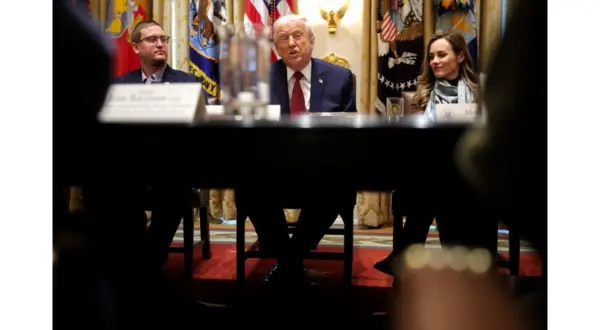
President Donald Trump participates in a roundtable discussion with farmers and lawmakers in the Cabinet Room of the White House on Dec. 8, 2025 in Washington, D.C. Left is Cordt Holub of Dysart, Iowa, and right is Meryl Kennedy of Monroe, Louisiana.(Photo by Alex Wong/Getty Images)
The federal government will direct $12 billion to U.S. farmers hurt by what he called “unfair market disruption,” President Donald Trump announced Monday during a White House roundtable, framing the aid as a boost made possible by tariff revenue even as administration officials later clarified the funding source.
Trump said the package draws from what he described as tariff-generated income and cast his trade strategy as a benefit to agricultural producers, despite long-standing criticism that tariff escalations have reduced export opportunities for U.S. crops.
“I’m delighted to announce this afternoon that the United States will be taking a small portion of the hundreds of billions of dollars we receive in tariffs and we’re going to be giving and providing it to the farmers in economic assistance,” Trump said.
However, U.S. Agriculture Secretary Brooke Rollins told reporters the aid will come from the Commodity Credit Corporation a USDA arm funded annually through congressional appropriations rather than tariff revenue. She said payments, labeled by officials as “bridge payments,” are expected to reach farmers by the end of February.
Row crop growers to receive bulk of aid
According to a USDA breakdown, $11 billion of the package will be directed to row crop producers, including growers of soybeans, corn, wheat, cotton, rice and peanuts along with barley, chickpeas, lentils, oats, peas, sorghum, canola, flax, safflower, sesame, sunflower and other listed crops.
USDA plans to reserve $1 billion for specialty crops, though specific commodities were not identified.
The program caps individual payments at $155,000 per recipient, USDA Undersecretary Richard Fordyce said.
Rollins and other officials described the assistance as a temporary measure intended to bridge farmers to policy changes included in Republicans’ spending and tax law approved earlier this year. Administration officials blamed the Biden administration for rising costs and stalled trade negotiations, despite ongoing debate over the role of Trump-era tariffs in reducing international market access.
Praise from farmers, sharp criticism from Democrats
Iowa farmer Cordt Holub, who appeared at the event, thanked Trump for what he called financial relief during a difficult period for agriculture.
“It’s Christmas early for farmers,” Holub said.
Louisiana rice farmer Meryl Kennedy echoed support for the program and Republicans’ adjustments to reference prices, saying producers need “fair trade, not free trade.”
Democrats, however, blasted the package as insufficient and rooted in policy that created the hardship it intends to ease.
House Agriculture Committee ranking member Angie Craig of Minnesota said the relief “picks winners and losers in the farm economy” and fails to restore export opportunities lost in recent years.
“It will not bring U.S. agricultural exports back to pre-trade war levels,” she said, adding that tariffs remain a primary driver of farmers’ financial strain.
Senate Minority Leader Chuck Schumer also criticized the announcement, calling the plan an attempt to mask the effects of Trump’s trade approach.
“Now, Donald Trump is patting himself on the back, acting like a hero to farmers while using taxpayer dollars to clean up the mess he created,” Schumer said during remarks on the Senate floor.
More assistance possible or not needed, Trump says
Asked whether additional rounds of relief could follow, Trump offered mixed messages, saying further support would depend on how trade relationships develop while also insisting farmers prefer strong markets over subsidies.
“They don’t want aid,” Trump said. “They want to just have a level playing field.”
He later said he expects U.S. agriculture to enter a “golden age,” making additional support unnecessary, though Rollins said the administration remains open to future payments.
“We’re going to make the farmers so strong,” Trump said, “that they just want to be able to produce what they can produce.”
WebReadyTM Powered by WireReady® NSI