












Arkansas students may have celebrated the winter weather that kept them out of school for several days over the past week.
For educators reopening schools, however, it poses a challenge: how to make up lost instruction time.
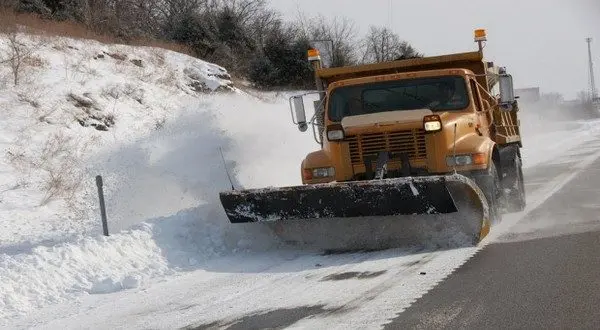
Multiple school districts closed last week after widespread ice, sleet and snow drove through the state and prompted the White House to declare an emergency in Arkansas.
Changes in state law in recent years and a move away from virtual instruction used during the COVID-19 pandemic have created a patchwork of responses to weather closures.
The Star City School District reopened Tuesday with limited bus routes following a six-day closure, which Superintendent Jordan Frizzell said was longer than average due to sleet accumulation. The southeast Arkansas district typically misses two to three days for ice or snow, Frizzell said.
“This is an adjustment being that it is a longer length of time to miss than normal, but we will modify and adjust accordingly,” he said.
Districts are required to provide a minimum of 178 days or 1,068 hours of instruction. Star City operates on an hours-based calendar that includes five days of flexibility, so the sixth inclement weather day will be made up at the end of the year, Frizzell said.
Districts have discretion to decide when to close and how to make up lost instruction time. The Waldron School District in western Arkansas offered excused absences when it reopened Monday without bus service, while the North Little Rock School District welcomed students back with a one-hour delayed start time Tuesday.
Districts choose their individual calendars annually to “provide optimal time for learning,” but the Arkansas Department of Education said it recognizes hazardous conditions can disrupt things.
The state cited safeguards, such as requiring districts to include five make-up days or 30 make-up hours depending on their calendars in the event of extreme circumstances.
“ADE continues to work on innovative ways to protect student learning and meet seat time requirements,” the department said in a statement.
The department has fielded multiple calls and emails regarding making up missed time, according to spokesperson Kaelin Clay, who said the number of inclement weather days this year has not been unusual.
How school districts make up of inclement weather days shifted two years ago as superintendents adjusted to a massive education law called the LEARNS Act.
The 2023 law required districts to provide a minimum of 178 days or 1,068 hours of “on-site, in-person instruction” to receive state funding to support another provision of the law that increased teachers’ minimum salary from $36,000 to $50,000.
Previously, districts could offer online instruction or take-home assignments through alternative methods of instruction or AMI days during inclement weather. Districts can still offer AMI days, but they don’t count toward the in-person requirement.
Following severe weather in early 2024, the education department issued guidance that districts could use scheduled professional development days as makeup days or request a waiver to transition to an hourly calendar mid-year. Several did the latter, which allowed them to lengthen school days instead of adding days to the end of the school year.
One of those districts that switched to an hours-based calendar was Little Rock, which reopened Tuesday.
Superintendent Jermall Wright said lengthening school days has allowed the district to bank the equivalent of seven days, one more than the six days they were closed.
The district has three non-student days in February and March that Wright said he will ask the school board to convert into contact days that could be used to make up lost time.
While virtual instruction through AMI days has value, Wright said not all of the digital devices purchased during the pandemic may still be functional.
“So it would create some equity challenges for many of our students who won’t have devices to use at home,” he said.
Republican Rep. Julie Mayberry of East End unsuccessfully pushed in 2023 and 2005 for AMI days to again count toward in-person instruction, citing the learning loss likely to happen during extreme weather. She also said virtual learning is good preparation for the workplace where virtual tools are common.
“I’m just trying to give flexibility to school districts to make decisions that work best for their students in their situation so that we do not have learning loss,” she said.
LEARNS Act supporters have noted AMI days are still permitted, they just don’t count toward the in-person requirement. They have also pointed to learning loss during the pandemic as an example of why in-person instruction is important.
Mayberry agreed the goal is always to get kids back in the classroom, but said it’s important to give districts another tool for extreme situations like the 2023 tornado that destroyed Wynne High School.
“There’s things that happen that we just have to make the best of the circumstances, and I believe providing AMI helps us to make the best of the circumstances,” she said.
Mayberry, who’s not seeking reelection, is unaware of another lawmaker who might address this issue during the 2027 legislative session, but said she’s happy to speak with anyone who’s interested.
To view this story, or for more news updates from Arkansas Advocate, click here.
WebReadyTM Powered by WireReady® NSI