












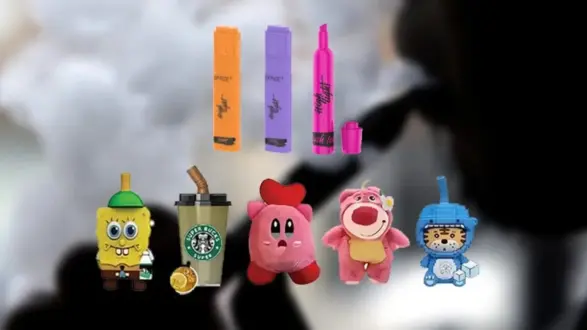
A newly published study led by researchers at the University of Arkansas for Medical Sciences has found that illegal e-cigarettes designed to resemble miniature drink cups, soda cans and toy animals are being widely promoted on Instagram, often in ways that could appeal to young people.
The research, published in the American Journal of Preventive Medicine, was led by Page D. Dobbs of the UAMS Fay W. Boozman College of Public Health. The project also included two middle school students from Hot Springs Junior Academy who participated as youth researchers through the EAST Initiative program.
Researchers examined 199 public Instagram posts from July through December 2022 that promoted miniature cup- and toy-shaped vaping devices. The study found that 77 percent of the posts displayed e-cigarettes resembling miniature boba tea cups, 27 percent featured devices shaped like small cola cans and 15 percent showed products designed to look like animals or toys. Nearly a quarter of the posts depicted people actively vaping, while 17 percent appeared to show young people using the devices.
The analysis also found that 35 percent of the posts promoted international shipping of the products and 11 percent showed large-scale manufacturing of the devices. Although some posts stated the products were intended for adults over 18, none of the miniature cup- or toy-shaped devices identified in the study are authorized for sale by the U.S. Food and Drug Administration, making them illegal in the United States.
Researchers said the design of the products, which resemble everyday household items, raises concerns about both youth appeal and the potential for accidental exposure among young children.
The project used a youth participatory action research model, allowing the student researchers to help identify emerging trends and hashtags associated with the products while limiting their exposure to tobacco marketing content. Dobbs said involving students as research partners provided valuable insight into how the products may be perceived by adolescents.
Despite warning letters issued by federal regulators to retailers selling disguised vaping products, researchers say promotion of the devices continues on social media platforms popular with youth.
With an estimated 1.63 million U.S. middle and high school students reporting e-cigarette use in 2024, researchers say stronger enforcement of tobacco laws, greater oversight by social media platforms and increased education for parents, educators and health professionals will be important steps in reducing youth exposure to nicotine products.
WebReadyTM Powered by WireReady® NSI