












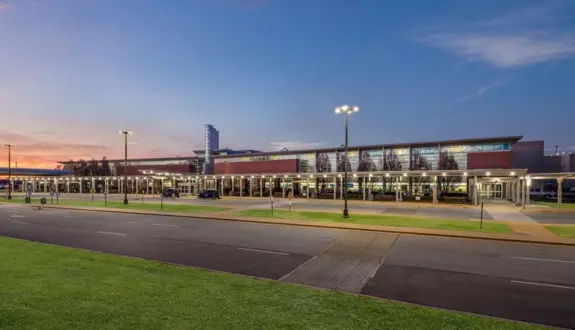
A new air traffic control tower is now operational at Northwest Arkansas National Airport, a project federal officials say will help modernize the nation’s airspace system.
Federal Aviation Administration Administrator Bryan Bedford joined U.S. Rep. Steve Womack and state leaders Wednesday to mark the opening of the new 145-foot tower, which replaces the airport’s original tower that had been in place since the airport opened in 1998.
Bedford said modernizing air traffic infrastructure is critical as aviation technology continues to evolve and airspace becomes more crowded.
He said the system must be prepared for increased activity, including drones, advanced air mobility aircraft, supersonic travel and more frequent space launches.
The new tower stands nearly three times taller than the previous structure and operates on modern digital technology. Officials said the original tower relied on outdated analog systems that used copper wiring and were no longer efficient.
Many air traffic control towers across the country were built in the 1950s and 1960s and have reached the end of their useful life, Bedford said.
The project cost $17.6 million, with nearly $17 million funded through state and federal grants, including funding from the FAA.
Northwest Arkansas National Airport, which became the busiest airport in Arkansas last year, plays an important role in the region’s economic development, Womack said. He noted that reliable air travel helps attract businesses and skilled workers to the area.
Six air traffic controllers are currently assigned to the new tower, and airport officials hope to add three more positions later this year.
Nationwide, the FAA continues to face a shortage of air traffic controllers. Federal officials say disruptions caused by government shutdowns and the COVID-19 pandemic slowed hiring and training in recent years.
Bedford said the FAA has increased recruitment efforts, hiring more than 2,000 new trainees last year and planning to bring in about 2,200 more this year, with authorization for up to 2,500 next year.
Training an air traffic controller typically takes three to four years, Bedford said, and the FAA is working to speed up training while maintaining safety standards.
Despite increased hiring, the Government Accountability Office reports there were about six percent fewer controllers nationwide in fiscal year 2025 than there were a decade earlier, even as flight activity continues to rise.
Federal data shows total flights using the U.S. air traffic control system increased roughly 10 percent between 2015 and 2024, reaching more than 30 million flights annually.
WebReadyTM Powered by WireReady® NSI