












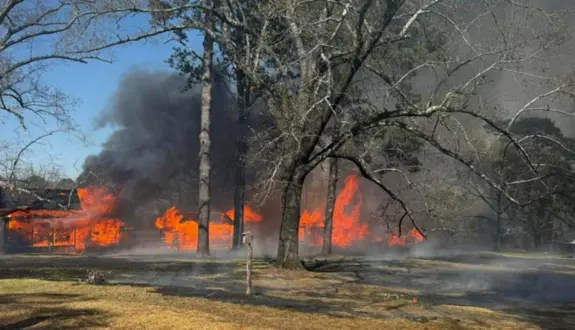
Firefighters across Arkansas continue to respond to a surge in wildfires, with state officials reporting dozens of fires and thousands of acres burned in recent days.
According to the Arkansas Department of Agriculture, at least 27 fires have been suppressed since Monday, damaging more than 2,000 acres. That number has continued to climb, with officials estimating around 30 or more fires reported statewide.
Emergency crews, along with the Arkansas Forestry Division, responded Tuesday to a forest fire off Tyler Road in Cleburne County. Officials say conditions have created a dangerous environment for rapid fire spread.
“This week so far has been above average temperatures, low humidity and higher winds, and so those are a domino effect for wildfire activity,” said Wesley McKinney with the Arkansas Forestry Division.
Officials say recent light rain has done little to improve conditions. McKinney said it will take sustained rainfall to reduce fire risk.
“What we need is 12 to 15 inches of rain, but not all at once,” he said. “If we can get moisture underneath the canopy of the trees, it’s going to hold longer and give our firefighters a break.”
Fire crews have been working around the clock, often responding to multiple fires across county lines. Officials say fatigue is becoming a concern.
“These guys have been battling fires all through the night,” McKinney said. “They might get four hours of sleep, then they’re back out again.”
At last report, more than 250 wildfires have burned over 7,200 acres statewide. Officials are urging residents to use extreme caution, noting even small sparks can quickly ignite fires under current conditions.
“You could be dragging a chain, throwing a cigarette out, even a flat tire could spark a fire,” McKinney said.
Officials stress avoiding any outdoor burning and limiting activities that could create sparks as fire danger remains high.
WebReadyTM Powered by WireReady® NSI